
Classification and extraction methods of plant extracts
Leave a message
1. Classified by different extraction purposes:
1) Proportional extract: It is a substance made by extracting and concentrating plant, animal, and other raw materials into a paste, liquid extract, or powder. The mathematical ratio of the amount of raw materials before extraction to the product after extraction and concentration. Proportional extracts generally do not have very clear composition and content. For example, when 10 kilograms of Scutellaria baicalensis medicinal herbs are extracted and concentrated into 1 kilogram of powdered product, we call it a 10:1 ratio extract of Scutellaria baicalensis. There is no clear standard for important indicators such as baicalin and baicalein in this extract. Proportional extracts are usually qualitatively detected using thin-layer scanning (reflection method), which is a vague concept and not conducive to the development of the extract industry. Therefore, establishing a quality control system and standards for proportional extracts has been a unanimous call in the industry for many years.
2) Standard extract: It is an extract of herbs, plants, animals, etc. that has consistent standards.
Standard extract of traditional Chinese medicine refers to an extract with relatively clear content and quality (quantitative) obtained by extracting and processing traditional Chinese medicinal materials using modern scientific technology.
2. Classified by different extracted components:
① Alkaloids: are a complex class of nitrogen-containing organic compounds with special physiological activities and medical effects. Ephedra sinica contains ephedrine for treating asthma, while Ranruo contains Ranruopus for relieving spasms and pain.
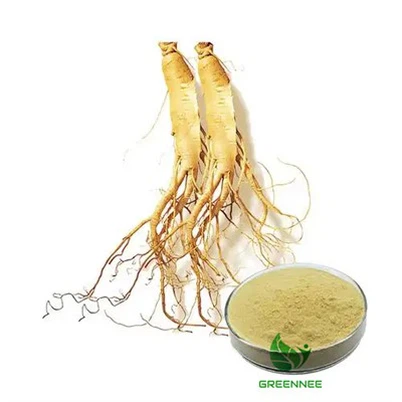
② Glycosides, also known as glycosides, are formed by the combination of sugars and non sugar substances. The commonality of glycosides lies in the sugar component, and different types of glycosides have different physiological activities and multifaceted functions. The leaves of digitalis contain cardiotonic glycosides, while ginseng contains ginsenosides, which have the effects of tonifying qi, generating fluids, and calming the mind.
③ Volatile oil: also known as essential oil, is an oily liquid with aroma and volatility, composed of a mixture of various compounds, with physiological activity, and has various effects in medical treatment, such as cough relief, asthma relief, sweating, surface relief, phlegm removal, wind dispelling, pain relief, antibacterial, etc. Medicinal plants with abundant volatile oil content include Platycodon grandiflorus, Magnolia officinalis, Magnolia officinalis, Camphor tree, Cinnamomum cassia, Eucommia ulmoides, Angelica dahurica, Chuanxiong, Angelica sinensis, peppermint, etc.
④ Tannin: a mixture of polyphenolic compounds. It exists in various plants, especially in the families of Salicaceae, Fagaceae, Polygonaceae, Rosaceae, Leguminosae, Myrtle Myrtle, and Rubiaceae, where it is abundant. The medicinal herb galls grown on the medicinal plant Rhus chinensis are called galls, which contain galls tannins and have astringent, antidiarrheal, and antiperspirant effects.
⑤ Other components, such as sugars, amino acids, proteins, enzymes, organic acids, oils, waxes, resins, pigments, inorganic substances, etc., each have special physiological functions, many of which are important drugs in clinical practice.
Extraction methods of plant extracts
At present, commonly used methods for extracting plant extracts include solvent extraction, ultrasonic extraction, microwave extraction, etc. Supercritical fluid extraction, microwave-assisted extraction, etc. are widely used as new extraction techniques.
Solvent extraction method
Generally refers to the method of extracting effective parts from Chinese herbal medicine. Based on the solubility of various components in solvents, solvents with high solubility for active ingredients and low solubility for components that do not need to be dissolved are selected, and the method of dissolving effective ingredients from medicinal tissues is called solvent extraction method. When a solvent is added to the raw materials of Chinese herbal medicine, the solvent diffuses. Permeation penetrates through the cell wall, dissolving soluble substances and causing a concentration difference between the inside and outside of the cell. The concentrated solution inside the cell continuously diffuses outward, and the solvent continuously enters the medicinal tissue cells, repeatedly shuttling back and forth until the concentration of the solution inside and outside the cell reaches dynamic equilibrium. When this saturated solution is filtered out and new solvent is added, most of the required components can be dissolved out.
Ultrasonic extraction method
Ultrasonic extraction is the use of strong vibrations and cavitation effects generated by ultrasound to accelerate the release, diffusion, and dissolution of substances within plant cells into solvents, while maintaining the structure and biological activity of the extracted substances unchanged. The principle of ultrasonic extraction is mainly based on physical processes, and it is a relatively new extraction method that has gradually gained attention in recent years. For most components, ultrasonic extraction method can significantly shorten the extraction time, consume less solvent, and have a higher extraction rate compared to conventional solvent extraction. Therefore, it has a higher extraction efficiency. In the ultrasonic extraction process, the selection and concentration of solvent, solid-liquid ratio, extraction temperature, and extraction time will directly affect the extraction rate.
Supercritical fluid extraction method
Supercritical fluid extraction (SFE) is the most advanced physical extraction technology internationally. At lower temperatures, as the pressure of a gas continues to increase, the gas will transform into a liquid. As the pressure increases, the volume of the liquid increases. For a specific substance, there is always a critical temperature (Tc) and critical pressure (Pc) above which the substance will not become a liquid or gas. This is the critical point. Within the range above the critical point, the state of matter is between gas and liquid, and the fluid within this range becomes a supercritical fluid (SF). Supercritical fluids have strong penetration similar to gases and high density and solubility similar to liquids. They have good solvent properties and can be used as solvents for extraction and separation of monomers.
Microwave assisted extraction method
Microwave assisted extraction (MAE) is a new technology that utilizes microwave energy to improve extraction efficiency. Microwave assisted extraction is a method of selectively extracting target components from materials using the characteristics of microwave heating. By adjusting the parameters of the microwave, the target components can be effectively heated to facilitate their extraction and separation.