
L-theanine
L-theanine Cas No.: 3081-61-6 Molecular formula: C7H14N2O3
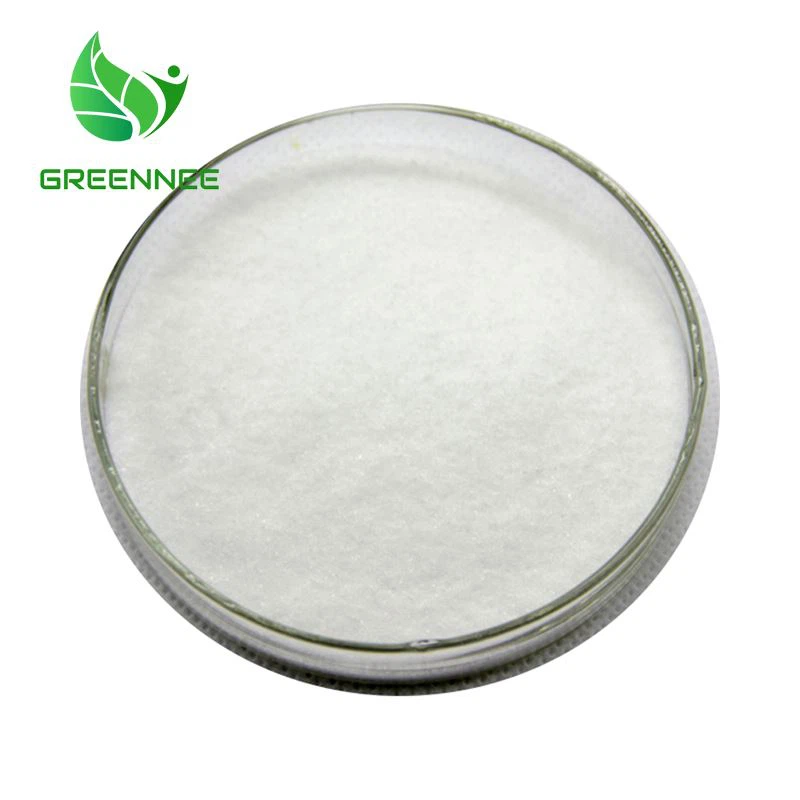
Appearance: white or off white powder.
Melting point: 202-215 ℃
pH value: 5.0-6.5
Origin:China
Production Capacity:100ton/Tons Per Month.
Transport Package:25kg/drum.
Certificate:ISO9001/Halal/Kosher
HS Code:29309012
Description
L-Theanine
Also known as L-theanine, N-ethyl-L-glutamine
Chemical formula C7H14N2O3
Molecular weight 174.198
CAS login number 3081-61-6
EINECS login number 221-379-0
Melting point 207 ℃
Boiling point 427.13 ℃
Water soluble, soluble in water, insoluble in ethanol and ether
Density 1.171 g/cm ³
Appearance: White crystalline powder
Flash point 212.12 ℃
Application seasoning (aroma components of green tea)
Function:
Blood pressure lowering effect
Blood pressure regulation is mainly achieved through the increase or decrease of catecholamines and serotonin in the central and peripheral nervous systems. Yokogoshi et al. demonstrated through experiments that administering theanine to mice can reduce the content of serotonin, leading to a decrease in serotonin synthesis in the brain and an increase in its breakdown in the brain. When spontaneously hypertensive rats (SHR) were injected with different doses of theanine, blood pressure decreased, and the degree of decrease showed a dose-dependent relationship. A significant decrease in blood pressure was observed in the high-dose group; But even with the highest dose of theanine, it does not change the blood pressure of normal rats; However, glutamic acid, which has a similar structure to theanine, was not found to have a blood pressure lowering effect.
Adjuvant tumor suppression effect
Recent studies have shown that although theanine itself has no anti-tumor activity, it can improve the efficacy of various anti-tumor drugs. Adriamycin has an inhibitory effect on some tumors, and theanine can protect the concentration of doxorubicin in tumor tissues, reducing the exudation of doxorubicin from Ehrlich ascites tumor cells. Therefore, when theanine is used in combination with doxorubicin, it can increase the growth inhibition of living tumors by 2.1 times and the concentration of doxorubicin in tumor tissues by 2.9 times. In addition, injecting the anti-cancer drug idarubicin can reduce the number of white blood cells and bone marrow cells, but when used in combination with theanine, it can alleviate the toxicity of idarubicin and promote its anti-tumor effect, indicating that theanine has a selective regulatory effect on the toxicity caused by idarubicin. When the anticancer drug doxorubicin is used in combination with theanine, it can inhibit the metastasis of M5076 ovarian sarcoma to the liver. Recently, Sa dzuka et al. further studied the pathway by which theanine enhances the anticancer activity of doxorubicin, and pointed out that theanine increases the concentration of doxorubicin in tumor cells by inhibiting glutamate transport in tumor cells, thus achieving an improvement in its anticancer efficacy. Theanine is very beneficial for clinical chemotherapy of cancer patients. It not only promotes the action of certain anti-tumor drugs, but also improves the quality of life of cancer patients.
Relaxing nervous tension, relaxation, and other effects
Terashima et al. found that the main receptor for theanine is the brain. After passing through the brain barrier and entering the brain, theanine significantly increases the intracellular neurotransmitter dopamine in brain cells. Dopamine is a precursor of adrenaline and noradrenaline, and is an important substance for conveying the excitability of brain nerve cells. Its release can greatly affect human emotions. In addition, Yokogoshi et al. found through the use of serotonin (5-hydroxytryptamine) metabolic inhibitors that theanine can affect the synthesis and breakdown of serotonin in the brain. After taking theanine, the content of tryptophan in the brain significantly increases or shows an increasing trend, but the content of serotonin decreases. Theanine may reduce serotonin synthesis and increase its breakdown, or inhibit serotonin release.
Protective effect on brain nerve cells
Glutamate is an excitatory neurotransmitter, with a concentration of 1mmol-10mmol/L in nerve cells. When cerebral ischemia occurs, the intracellular supply of O2 is interrupted, leading to a decrease in the production of adenosine triphosphate (ATP), an energy substance in the cell, which gradually depletes. The neuronal cell membrane separates, and glutamate is released from the extracellular space in excess, acting on receptors to continuously increase the concentration of calcium ions in the cell, triggering various enzyme activities, and finally acting on the cell to cause damage and death. Theanine has a competitive protective effect on glutamate receptors, therefore it has a protective effect on brain tissue and can prevent brain nerve cell death caused by cerebral ischemia.
Improving menstrual syndrome
Menstrual syndrome (PMS) is a psychological and physical discomfort that occurs in women between 3 and 10 days before menstruation. Juneja et al. investigated the improvement effect of theanine on PMS. 24 women were given 200mg of theanine daily, and after two months, PMS symptoms improved significantly, such as headache, lower back pain, chest distension, weakness, fatigue, inability to concentrate, and irritability. The mechanism still needs further research and may be related to the sedative effect of theanine.
Weight loss effect
After feeding mice with a diet mixed with 0.028% theanine for 16 weeks, their body weight decreased significantly compared to the control group, and abdominal fat decreased to 58% of the control group. At the same time, the levels of neutral fat and cholesterol in the blood decreased by 32% and 15% respectively, and cholesterol in the liver decreased by 28%. Therefore, the weight loss effect of tea is the result of the combined action of multiple components in tea, including theanine, which is particularly effective in reducing cholesterol in the body.
Application
Tea beverage quality improver
Functional food additives
Theanine has the effect of enhancing the intensity of alpha waves in the brain, making people feel relaxed, and improving memory, which has been confirmed through human experiments. Therefore, it can be added as a functional ingredient to food, developing foods that relieve nerve tension and enhance cognitive function. For example, black tea jelly is made by adding 5% of black tea concentrated extract (Bx=20), 5% of filling sugar (Bx=7.5), 15% of granulated sugar, 1% of gel agent, 0.2% of theanine, 0.2% of citric acid and 0.2% of sodium citrate, and adding water to 100%. After 60 minutes of consumption, brain waves were measured every 5 minutes. The results showed that the amount of alpha waves immediately increased after consumption, and after 30 minutes, there was a significant increase, up to 1.6 times. The study also confirmed that adding theanine to candies, various beverages, etc. can achieve good sedative effects. Japan is actively conducting research and development in this area.
Improvement effect of theanine flavor
Theanine can not only serve as a flavor enhancer for green tea, but also inhibit bitterness and astringency in other foods, achieving the goal of improving food flavor. Cocoa beverages and wheat tea have unique bitterness or astringency, and adding sweeteners can create an unpleasant taste. If 0.01% theanine is used instead of sweeteners, the results show that the flavor of the beverage is greatly improved after adding theanine. The study also confirmed that adding it to other foods (coffee, cocoa, ginseng drinks, beer) has a good effect on improving flavor.
Hot Tags: l-theanine, China l-theanine manufacturers, suppliers, factory, Crizotinib, Sea Buckthorn Fruit Extract, Epimedium Extract Powder, Acai Berry Extract, Agastache Rugosa Extract, Alfalfa Grass Extract
Send Inquiry
You Might Also Like